Doing water damage clean up the wrong way can trap moisture inside walls and flooring, leading to mold and structural problems weeks after the original leak seems resolved. Here’s how to approach it correctly.
Water Damage Clean Up: Step by Step
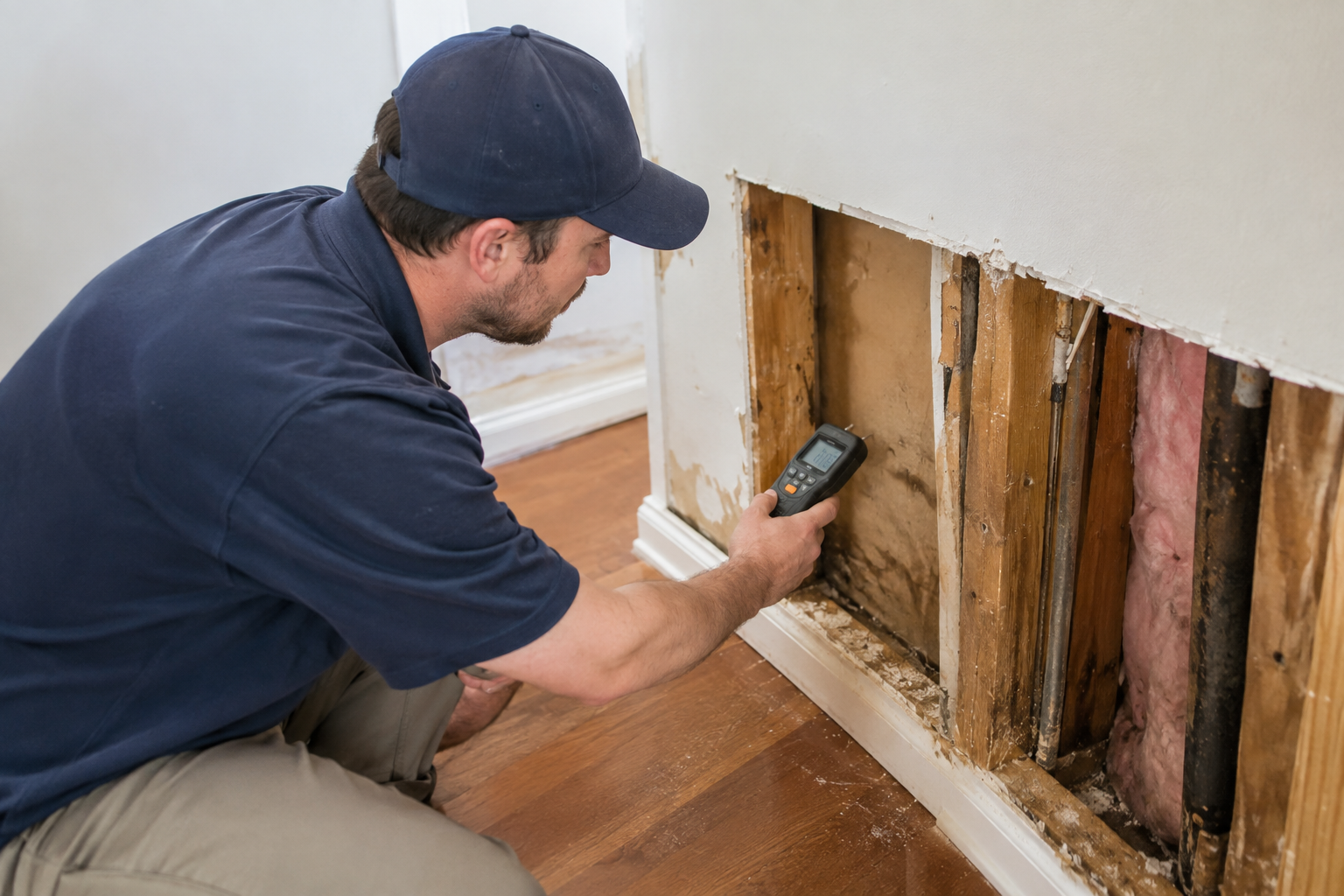
Start by removing standing water and anything soaked that can’t be salvaged, like ruined carpet padding or waterlogged cardboard boxes. Next, dry out the space using fans, dehumidifiers, and open windows when weather allows. Once visibly dry, check hidden areas — behind baseboards, under flooring, inside wall cavities — since these often stay damp long after surfaces feel dry to the touch.
Cleaning and Disinfecting
Any surface that contacted flood water, especially from a sewage backup or storm, should be cleaned with an appropriate disinfectant, not just wiped down. This step matters even more when the water came from an unclean source, since bacteria and contaminants can remain even after the area looks clean.
When DIY Water Damage Clean Up Isn’t Enough
- Water has been sitting for more than 24-48 hours.
- The affected area is larger than a small localized spill.
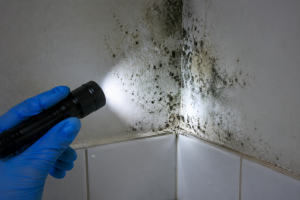
- You can smell a musty odor, which often signals hidden mold growth.
- The water source was contaminated (sewage, flood water, or standing water from outside).
Why Moisture Testing Matters More Than It Looks
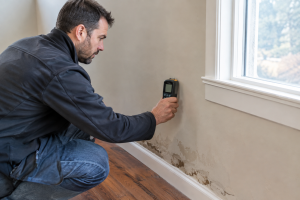
Following IICRC water damage standards, professionals use moisture meters to confirm materials are dry at the core, not just on the surface — a check that’s nearly impossible to do reliably without the right equipment. In these cases, professional equipment and moisture testing are the only reliable way to confirm a property is truly dry.
Documenting Clean Up for Insurance
Keep photos from every stage — before you start, mid-cleanup, and once the space is fully dry — along with receipts for any materials or equipment rentals. This record makes it far easier to support an insurance claim if damage turns out to be more extensive than it first appeared.
How Long Professional Drying Actually Takes
Most structural drying takes three to five days with commercial-grade air movers and dehumidifiers running continuously — considerably faster than consumer fans and a household dehumidifier, which can take a week or more and still miss moisture trapped deep inside building materials. Humidity levels, the type of material (drywall dries faster than hardwood or concrete), and how much airflow can reach the wet area all affect the timeline. A technician re-checks moisture levels with a meter before calling the job complete, rather than estimating by feel or by how long fans have been running.
Frequently Asked Questions
How much does water damage clean up cost?
It depends on the size of the affected area, the water source, and whether materials need to be replaced versus dried in place. A professional assessment gives the most accurate number.
Can I use a regular vacuum or should I rent a wet/dry vacuum?
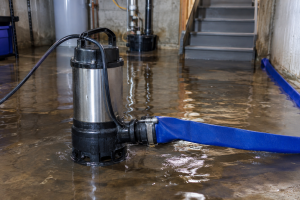
Never use a regular household vacuum on standing water — it’s a shock hazard. A wet/dry shop vacuum is safe for small amounts of water; anything more than that is better handled by a professional with pump equipment.
How do I know if my walls are dry inside, not just on the surface?
You generally can’t tell by touch alone. Professionals use moisture meters that measure moisture content inside the material, which is the only reliable way to confirm a wall or floor is dry at the core.
Is sewage backup clean up different from regular water damage clean up?
Yes. Sewage (Category 3 “black water”) carries contamination that requires full removal of affected porous materials and stricter disinfecting protocols, rather than the cleaning-in-place that’s often fine for clean water sources.
Should I throw out carpet after water damage?
Carpet exposed to clean water for a short time can sometimes be salvaged if dried quickly. Carpet and padding exposed to contaminated water, or anything left wet for more than 48 hours, should generally be replaced rather than cleaned.
Related Reading
- Water Damage Repair: What to Do Before Help Arrives
- Water Extraction 101: How Professionals Remove Water From Your Home
- Emergency Water Removal: A Step-by-Step Checklist for the First 24 Hours
- Water Mitigation vs. Water Restoration: What’s the Difference?
Dry On Time provides full water damage clean up and restoration services across New York and New Jersey, including Jersey City and Brooklyn, available 24/7 at (516) 852-7553.