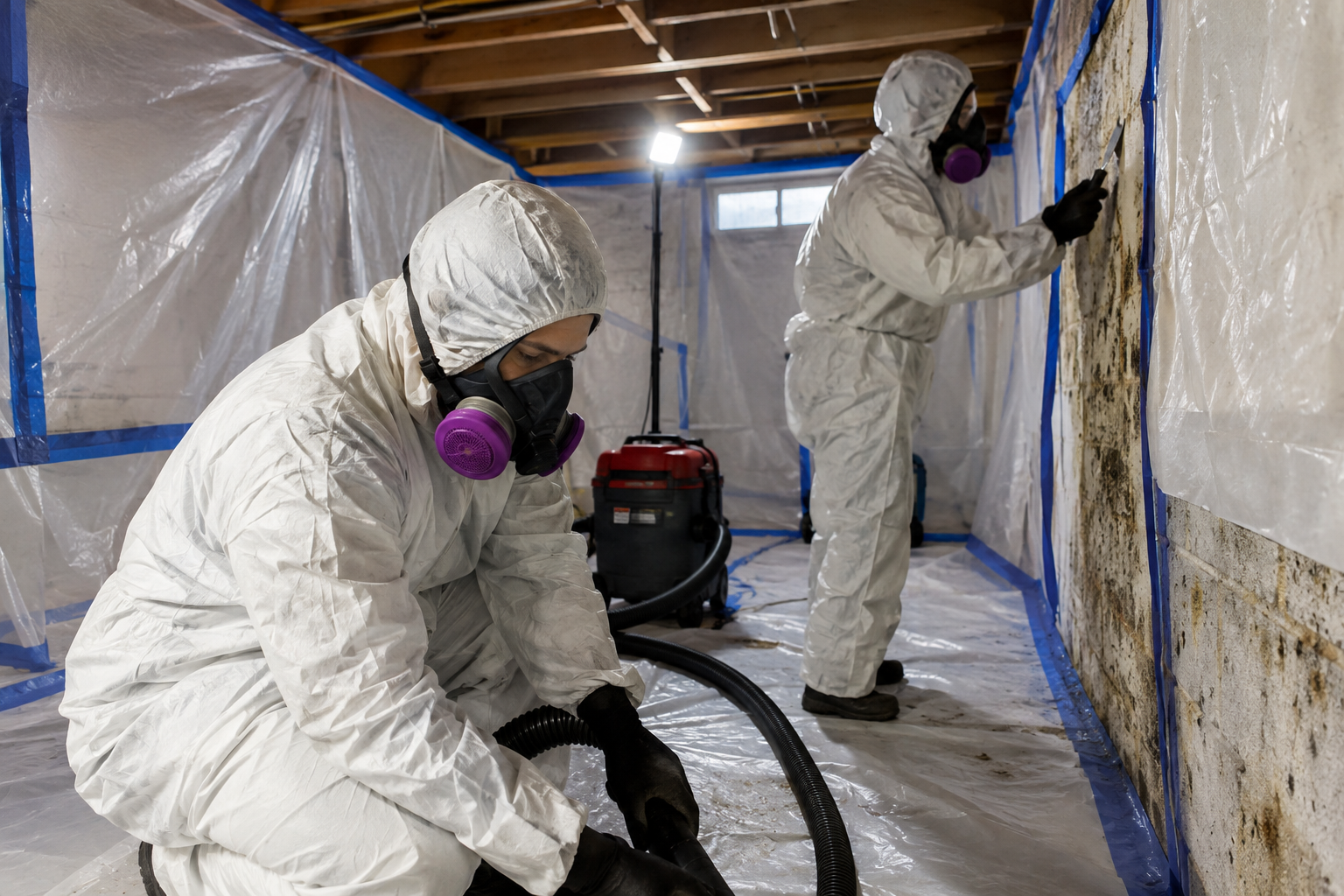
Not every company offering mold cleanup has the training or equipment to do it correctly. Knowing what qualifies as reliable mold remediation experts can save you from a job that looks finished but isn’t.
What to Check Before Hiring Mold Remediation Experts
- Certification — look for IICRC certification in mold remediation, which sets industry standards for the work.
- Insurance and licensing — confirm they carry liability insurance appropriate for the job.
- A written scope of work — a clear explanation of what will be tested, removed, treated, and verified.
- Moisture source correction — experts should address why the mold grew, not just clean what’s visible.
- Reviews and track record — actual customer experience with similar-sized jobs.
Questions Worth Asking
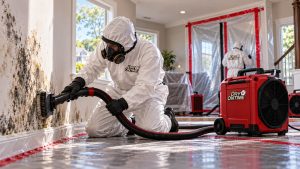
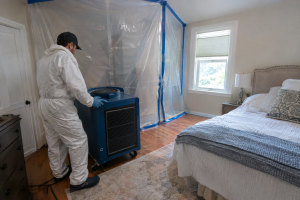
Ask how they contain the work area, whether they use HEPA air filtration, and how they verify the space is clear once work is done. Vague answers to any of these are a red flag.
What “IICRC-Certified” Actually Means
The IICRC (Institute of Inspection, Cleaning and Restoration Certification) requires technicians to complete documented training and pass exams on containment, air filtration, and moisture science before earning certification in mold remediation. It’s the closest thing the industry has to a universal quality benchmark — asking for a technician’s certification number is a quick way to confirm a company isn’t just claiming the credential.
Getting It in Writing
Before work begins, ask for a written agreement covering the scope of work, estimated timeline, and what “complete” looks like — ideally including post-remediation verification testing. A reputable company will have no hesitation putting these details on paper, and will walk you through exactly what that final verification check involves before you sign anything.
Red Flags That Signal an Unqualified Mold Company
A few warning signs are worth taking seriously: a company that can’t produce a technician’s certification number when asked, one that quotes a price over the phone with no in-person inspection, pressure to sign and pay immediately without a written scope of work, or a cash-only payment demand with no invoice. Any of these alone isn’t necessarily disqualifying, but two or more together is a strong signal to keep looking.
Frequently Asked Questions
How do I verify a company’s IICRC certification is real?
Ask for the technician’s certification number — the IICRC maintains records that can confirm an active certification tied to that number.
Should I get multiple quotes before hiring a mold remediation company?
Yes. Comparing itemized, written estimates helps you see what’s actually included (containment, air filtration, disposal, verification) rather than just comparing bottom-line prices.
What’s the difference between a mold inspector and a mold remediation company?
An inspector assesses and documents the problem; a remediation company does the actual containment, removal, and treatment work. Some companies offer both, which can streamline the process.
Can the same company that inspects for mold also do the remediation work?
Yes, many companies offer both. Some homeowners prefer a separate, independent inspector to avoid any incentive to oversell remediation work — either approach is reasonable.
What should a mold remediation contract include?
A written scope of work, estimated timeline, itemized pricing, what materials will be removed versus cleaned, and confirmation that post-remediation verification testing is included.
Related Reading
- How to Choose a Mold Remediation Contractor
- Mold Inspection: 7 Warning Signs It’s Time to Schedule One
- What Is Mold Remediation? The Complete Process Explained
- Mold Remediation Cost: What Factors Affect Your Price
Dry On Time’s team brings IICRC-certified expertise to every mold assessment, removal, and remediation project across New York and New Jersey, including Brooklyn and Jersey City. See what customers say, or call (516) 852-7553.