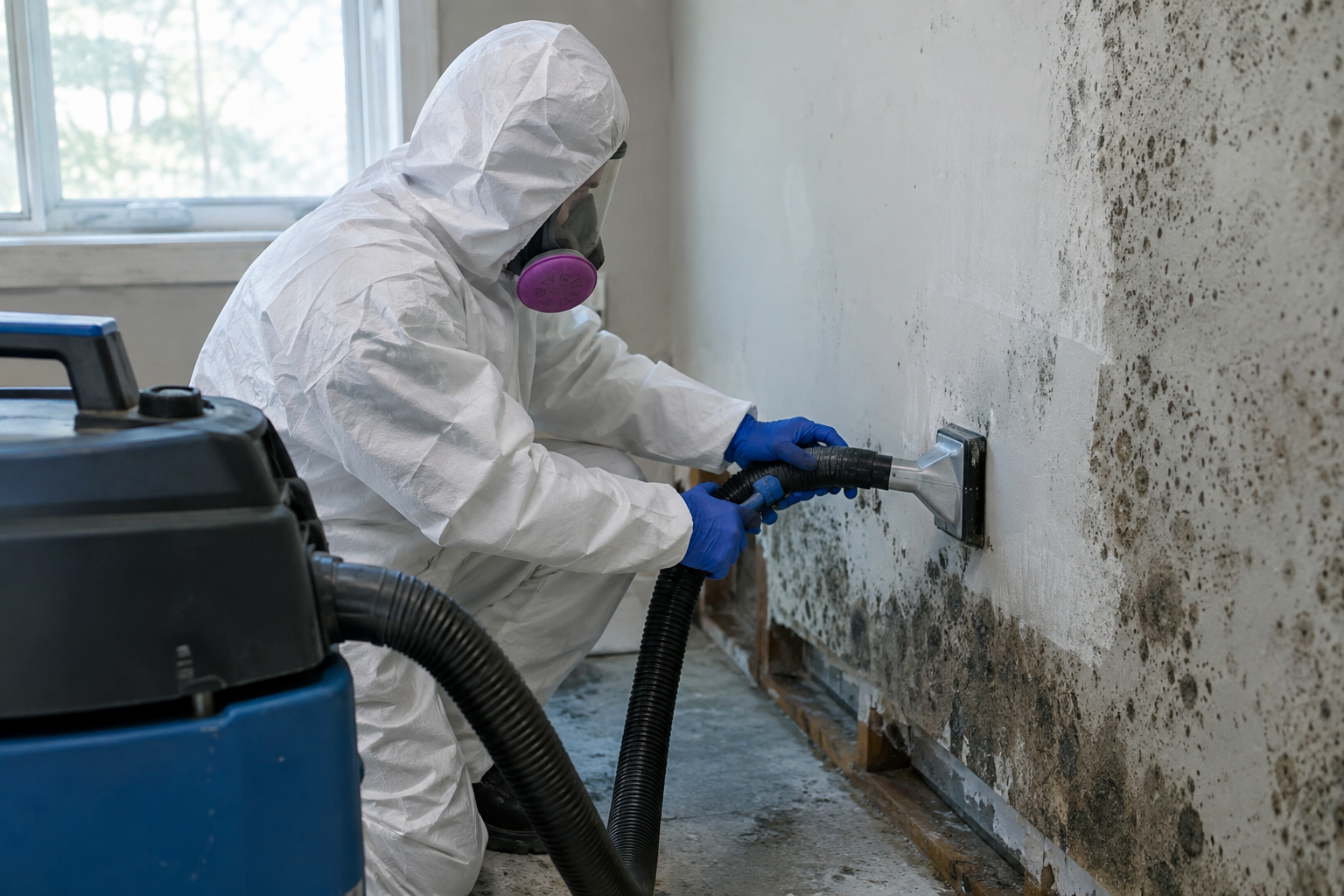
A small mold spot on a shower tile is very different from mold spreading behind drywall. Knowing when professional mold removal is necessary — versus when you can safely handle it yourself — protects both your health and your budget.
When DIY Might Be Enough
A patch of surface mold smaller than roughly 10 square feet, on a non-porous surface like tile or glass, with an already-fixed moisture source, can often be cleaned with household products and proper ventilation.
When You Need Professional Mold Removal
- The affected area is larger than about 10 square feet.
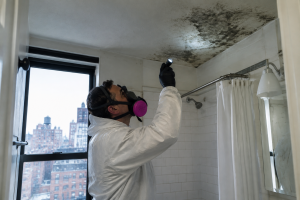
- Mold has grown on porous materials like drywall, carpet, or wood.
- The growth followed a flood, leak, or other water damage event.
- You or household members have allergy or respiratory symptoms that worsen indoors.
- You’ve cleaned it before and it keeps coming back.
Why Professionals Handle It Differently
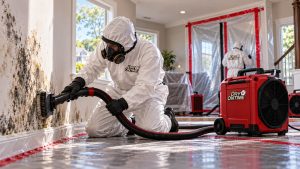
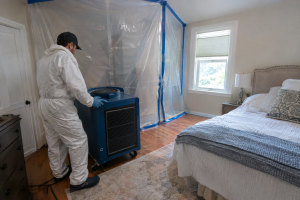
Professional mold removal uses containment, HEPA filtration, and moisture testing to make sure spores don’t spread during cleanup and that the space is actually safe afterward — protections a DIY approach typically can’t match.
The EPA’s 10-Square-Foot Rule of Thumb
The EPA’s mold cleanup guidance specifically recommends professional remediation once affected area exceeds about 10 square feet (roughly a 3-foot by 3-foot patch), regardless of how confident you feel about doing it yourself — at that size, proper containment becomes essential to avoid spreading spores to the rest of the home during cleanup.
If You Do Clean It Yourself
Wear gloves and an N95 mask at minimum, keep the area ventilated, and use a cleaner labeled for mold rather than bleach alone, which can discolor surfaces without fully killing mold beneath them. If the spot returns within a few weeks, treat that as a sign the moisture source still needs attention.
The Hidden Risks of DIY Mold Removal Gone Wrong
The biggest risk with DIY mold removal isn’t usually the cleaning itself — it’s disturbing mold without containment. Scrubbing, sanding, or even vacuuming a dry mold patch can release large numbers of spores into the air, spreading contamination to rooms that were previously unaffected. This is especially risky if anyone in the home has asthma, allergies, or a compromised immune system. A second common failure is treating only the surface: bleach and similar cleaners can kill surface mold while leaving roots intact inside porous material, so the problem looks resolved for a few weeks before reappearing — often worse, since the moisture source was never addressed either.
Frequently Asked Questions
Can I use bleach to remove mold?
Bleach can kill surface mold on non-porous materials like tile, but it’s not effective on porous materials like drywall or wood, where it can’t reach mold roots below the surface.
Is mold removal dangerous to do yourself?
For a very small, contained spot, the main risk is minor. For anything larger, disturbing the mold without proper containment can spread spores through the home, which is a real health risk for sensitive individuals.
How do I know if mold is coming from inside a wall, not just the surface?
A musty smell without visible mold, discoloration spreading beyond a cleaned area, or mold returning repeatedly after cleaning are all signs of hidden growth that a moisture meter or inspection can confirm.
What happens if I ignore a small mold problem?
Small, untreated mold problems typically grow larger over time, especially if the moisture source is never fixed, eventually requiring more extensive — and more expensive — remediation.
Do I need special equipment to remove mold safely myself?
At minimum, gloves, an N95 mask, and proper ventilation. Anything beyond a small surface patch really calls for the containment and HEPA filtration equipment professionals use.
Related Reading
- What Is Mold Remediation? The Complete Process Explained
- Mold Inspection: 7 Warning Signs It’s Time to Schedule One
- Mold Mitigation Explained: Stopping Mold Before It Spreads
- What to Look for in Mold Remediation Experts
Dry On Time provides professional mold removal and remediation across New York and New Jersey, including Queens and Manhattan’s Upper East Side. Call (516) 852-7553 if you’re unsure which category your situation falls into.