Mold mitigation refers to the immediate steps taken to contain and limit mold growth before full remediation begins — much like water mitigation is the emergency response to a flood.
What Mold Mitigation Includes
Mitigation focuses on stopping the spread: sealing off the affected area, shutting down HVAC systems that could circulate spores, controlling humidity with dehumidifiers, and addressing the moisture source causing the growth. It’s the containment phase that sets up a safe, controlled environment for remediation work.
Mitigation vs. Remediation
Mitigation limits the damage in the short term; remediation is the complete removal and cleanup process that follows. Both matter — skipping mitigation on a larger infestation risks spores spreading to unaffected rooms during the cleanup itself.
Why Early Mold Mitigation Makes a Difference
- Smaller, earlier problems typically cost less to resolve than infestations that spread across multiple rooms.
- Containing the area protects household members and employees from unnecessary exposure.
- Fixing the moisture source early prevents the same problem from recurring later.
What Proper Containment Actually Looks Like
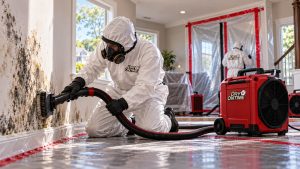
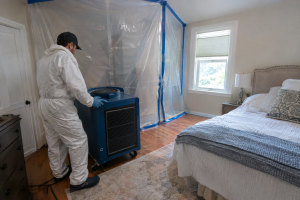
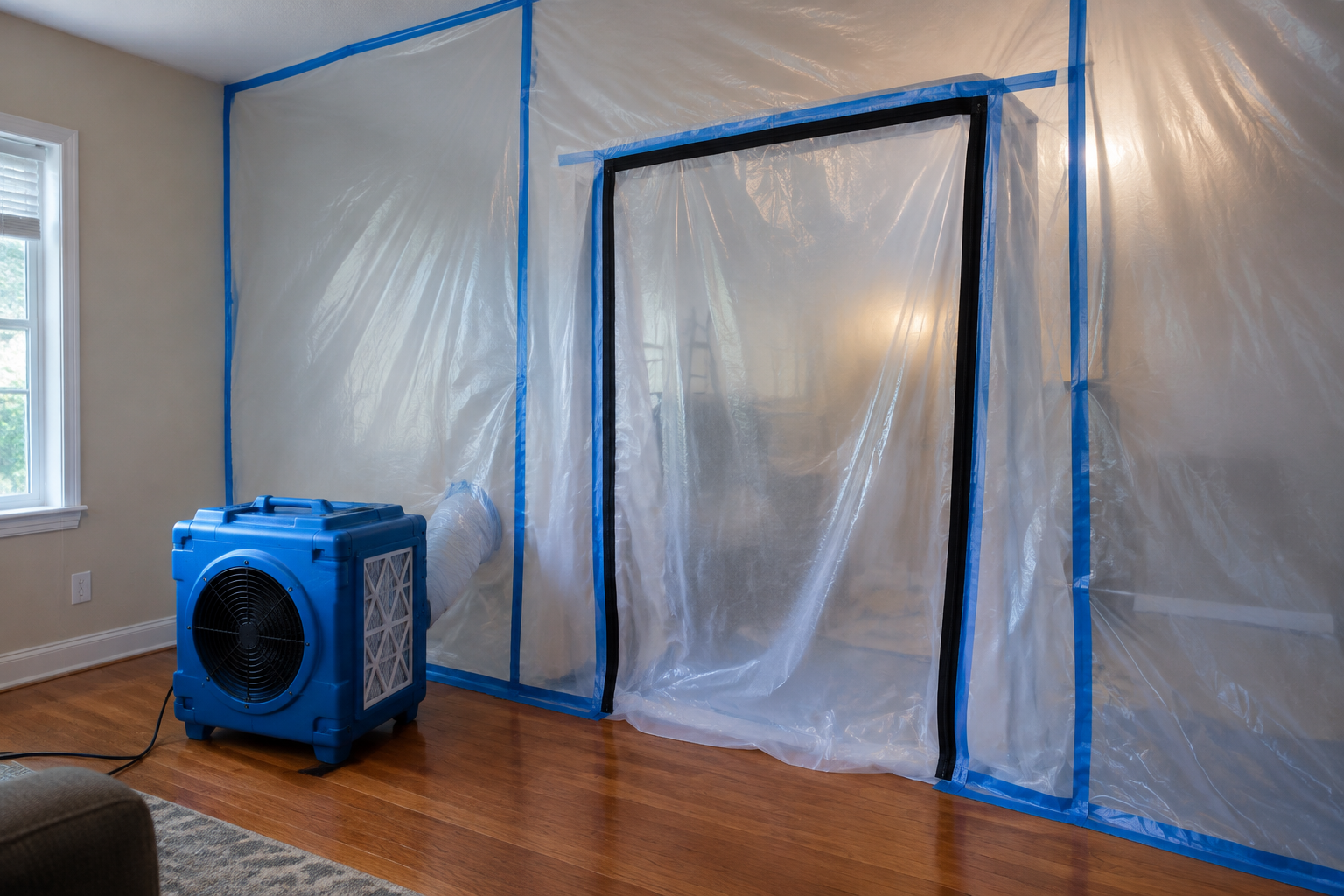
Following EPA mold guidance, effective containment means sealing the work area with plastic sheeting, running negative air pressure with HEPA filtration so spores are pulled out of the room rather than pushed into the rest of the house, and keeping household members — especially anyone with asthma or allergies — away from the area until work is finished.
Signs Mitigation Is Already Overdue
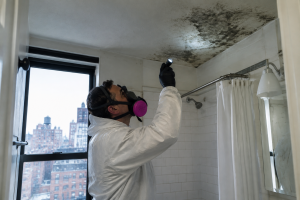
If you can smell mold from outside the affected room, see visible growth spreading beyond its original spot, or notice household members reacting the moment they enter a space, mitigation should start immediately rather than waiting for a scheduled appointment days out.
Mold Mitigation and Insurance: What’s Typically Covered
Insurance treats mold mitigation the same way it treats the underlying cause. If the moisture came from a sudden, covered event — a burst pipe or an appliance failure — the mitigation work to contain and address it is often covered alongside the remediation that follows. Mold tied to long-term humidity, a slow leak that went unaddressed, or general maintenance neglect is typically excluded, regardless of how quickly you act once you notice it. Keeping photos and a timeline from the moment you first spot a problem helps establish that you acted on a new issue rather than let an existing one sit.
Frequently Asked Questions
Is mold mitigation the same as mold remediation?
No. Mitigation is the immediate containment step that limits spread; remediation is the full removal, cleaning, and moisture-source correction that follows.
How much does mold mitigation cost?
Mitigation alone is typically less expensive than full remediation since it focuses on containment rather than removal and repair, but the two are often billed together as part of one project.
Can I handle mold mitigation myself while waiting for a professional?
You can reduce humidity and avoid disturbing the affected area, but sealing off a room properly with negative air pressure and HEPA filtration requires equipment most homeowners don’t have on hand.
How quickly should mold mitigation start after you notice a problem?
As soon as possible — ideally within 24 to 48 hours of first noticing a musty smell, visible growth, or a leak, before the problem has a chance to spread to other rooms.
Does mold mitigation require moving out of the affected space?
Usually not for a single contained room, though anyone with asthma, allergies, or a compromised immune system should avoid the area until containment is in place.
Related Reading
- What Is Mold Remediation? The Complete Process Explained
- Mold Removal vs. Mold Remediation: Which One Do You Need?
- Mold Inspection: 7 Warning Signs It’s Time to Schedule One
- Mold Remediation Price Guide: Small Jobs vs. Large-Scale Projects
Dry On Time provides mold mitigation and full mold assessment, removal, and remediation across New York and New Jersey, including Jersey City and Queens. Call (516) 852-7553 if you’ve spotted a problem.